PTFE Impregnated Asbestos Valve Packing & Gland Material
Combining high-tensile asbestos fibers for structural and thermal stability with deep PTFE dispersion impregnation, our asbestos PTFE packing delivers exceptional lubricity, chemical resistance, and high-pressure sealing performance for demanding industrial valves and steam systems.
Request a Sample & Quotation:
WhatsApp: +86-15222735180
Email: info@chn-rubber.com
High-Temperature & High-Pressure Static Sealing
PTFE Impregnated Asbestos Valve Packing & Gland Material
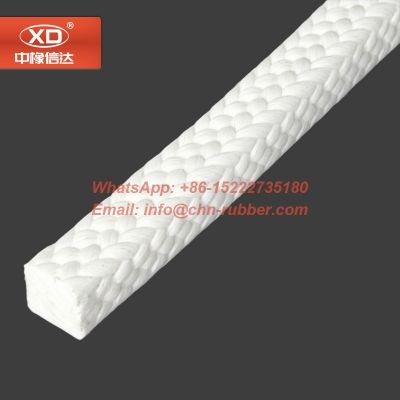
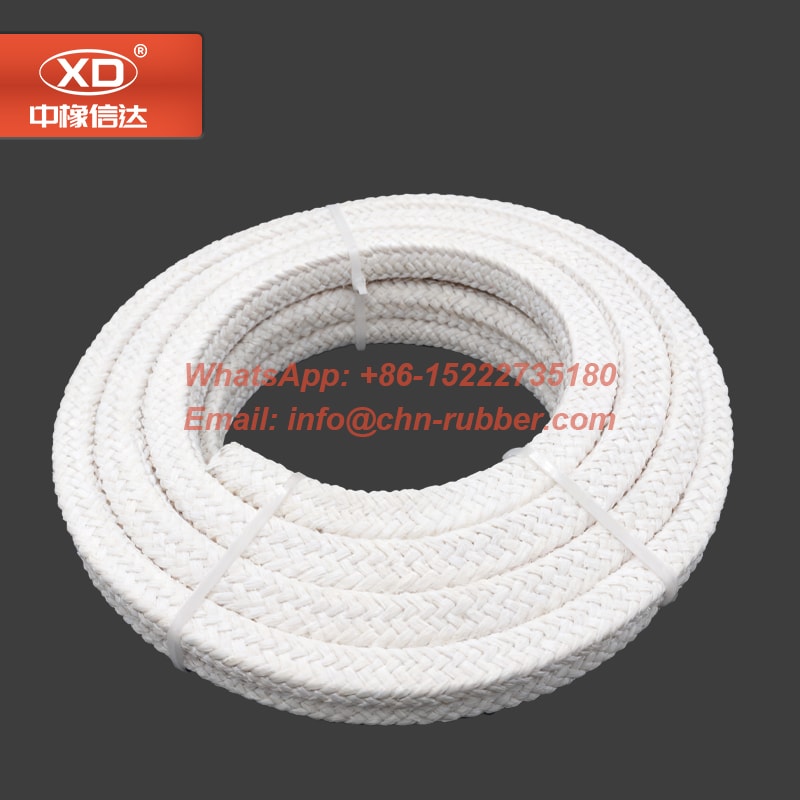
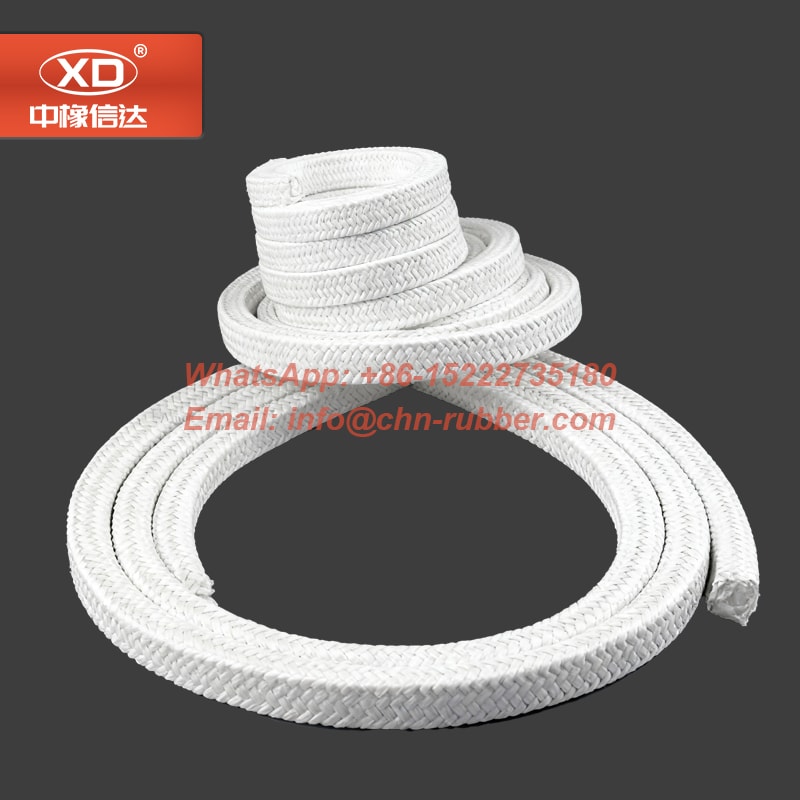
Hebei Xinda specializes in manufacturing high-performance asbestos ptfe packing engineered specifically for heavy industrial environments requiring reliable thermal and pressure resistance. By thoroughly saturating premium-grade asbestos yarns with advanced PTFE dispersions before lattice braiding, our ptfe impregnated asbestos packing achieves a dense, low-friction sealing matrix. It is widely specified as durable asbestos valve packing for steam headers, high-pressure distillers, and reciprocating machinery.
Thorough dispersion impregnation fills internal fiber pores, providing excellent self-lubrication and chemical inertness.
Robust lattice-braid structure resists extrusion and maintains dimensional stability under intense mechanical stress.
Formulated with built-in corrosion inhibitors to protect stainless steel and alloy valve stems from pitting.
Asbestos PTFE Packing Technical Data Sheet
| Performance Test Parameter | Test Unit | Target Specification |
|---|---|---|
| Maximum Operating Pressure | MPa | Up to 30 MPa (Valve Applications) |
| Maximum Linear Speed | m/s | ≤ 10 m/s |
| Working Temperature Range | °C | -50 °C to +260 °C |
| pH Value Range | pH Scale | 2 – 12 |
Precision Manufacturing Process
- 1. Pre-Braid PTFE Impregnation: Every individual asbestos thread undergoes complete saturation with high-grade PTFE dispersion prior to braiding, ensuring internal lubrication and comprehensive chemical barrier protection.
- 2. High-Density Lattice Braiding: Multi-strand mechanical braiding creates a compact, uniform cross-section that prevents packing shrinkage and withstands intense thermal cycling.
- 3. Anti-Corrosion Treatment: Specially blended surface passivation agents inhibit galvanic reaction and stem pitting when installed in industrial carbon and stainless steel valves.
Recommended Industrial Applications
Reliable stem sealing for industrial power plant steam headers, boilers, and turbine shutoff valves.
Packed glands for chemical processing vessels handling organic solvents, mild acids, and alkalis.
Heavy-duty stuffing box packing for piston pumps, oil refineries, and marine auxiliary machinery.
Cost-effective static and slow-moving dynamic seals requiring dependable thermal endurance.
Frequently Asked Questions
Pure asbestos is porous and can cause abrasive wear on metal shafts. Our PTFE impregnation fills these microscopic pores, creating a dense, self-lubricating seal that drastically reduces friction and improves chemical resistance.
It remains a preferred, cost-effective choice for heavy industrial steam systems, power generation plants, and marine engineering applications where high-temperature static sealing is required.