High-Purity PTFE Envelope Gasket for Chemical Flanges
Dual-Layer Chemical Shield: Ultimate Corrosion Protection for Ultra-Pure Processing
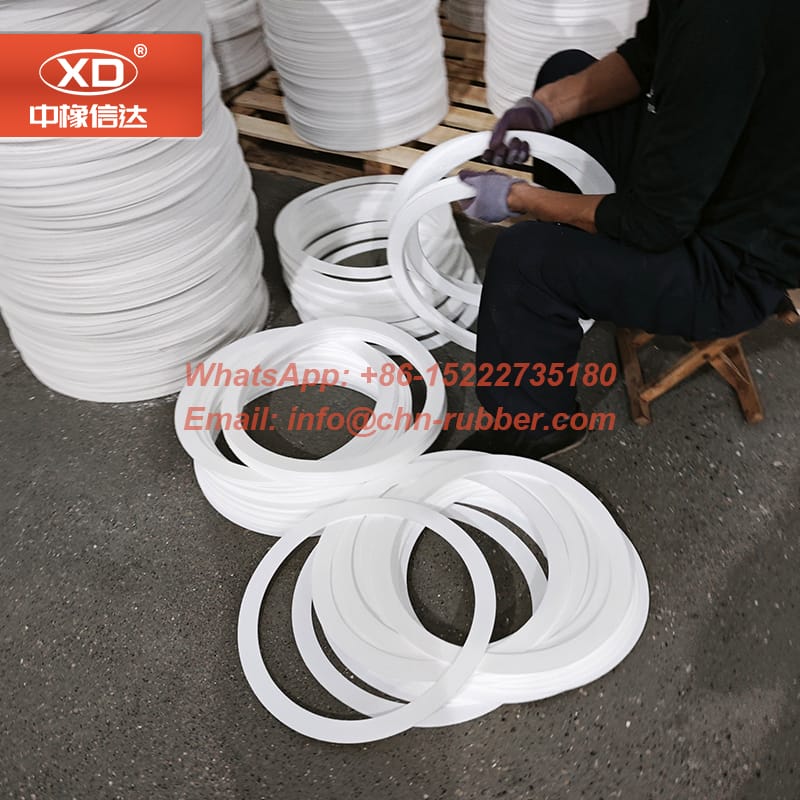
Our factory-engineered envelope gasket resolves these operational vulnerabilities by combining a resilient elastomer or fiber core with a seamless protective barrier. Utilizing an advanced manufacturing process, our premium gasket envelope provides an unyielding shield against strong acids, alkalis, and industrial solvents, ensuring that your media never interacts with the internal structural core. This advanced ptfe envelope configuration delivers reliable long-term sealing stability across fluctuating thermal cycles without sacrificing pure fluid integrity.
- Contamination-Free Barriers: The virgin protective shield prevents process fluid migration, completely eliminating fiber shedding, compound leaching, or fluid discoloration.
- Excellent Flange Adaptation: The non-stick exterior surface conforms smoothly to micro-irregularities on delicate glass-lined, ceramic, or metallic connections under low bolt loads.
- Multi-Core Options: Internal fillers can be custom-configured with soft rubber, compressed synthetic fiber, or corrugated steel to match precise system pressures.
Kathery Cui (Sales 1)
Mobile Phone:+86 15222735180
WhatsApp: 8615222735180
E-mail: info@chn-rubber.com
In contemporary chemical processing, pharmaceutical synthesis, and food-grade fluid distribution, securing reliable flange seals presents a unique engineering challenge. Specialized sealing components must withstand extreme chemical aggression while maintaining sufficient elasticity to absorb pipeline vibrations and joint misalignments. Standard solid seals frequently lack the required mechanical resilience, whereas flexible elastomeric rings break down quickly when exposed to aggressive solvents. Our factory-direct envelope gasket series effectively solves this dilemma. By encasing a high-elasticity core material within a highly stable outer jacket, this compound system delivers maximum chemical inertness along with outstanding structural recovery.
Composite Material Structure & Technical Operating Parameters
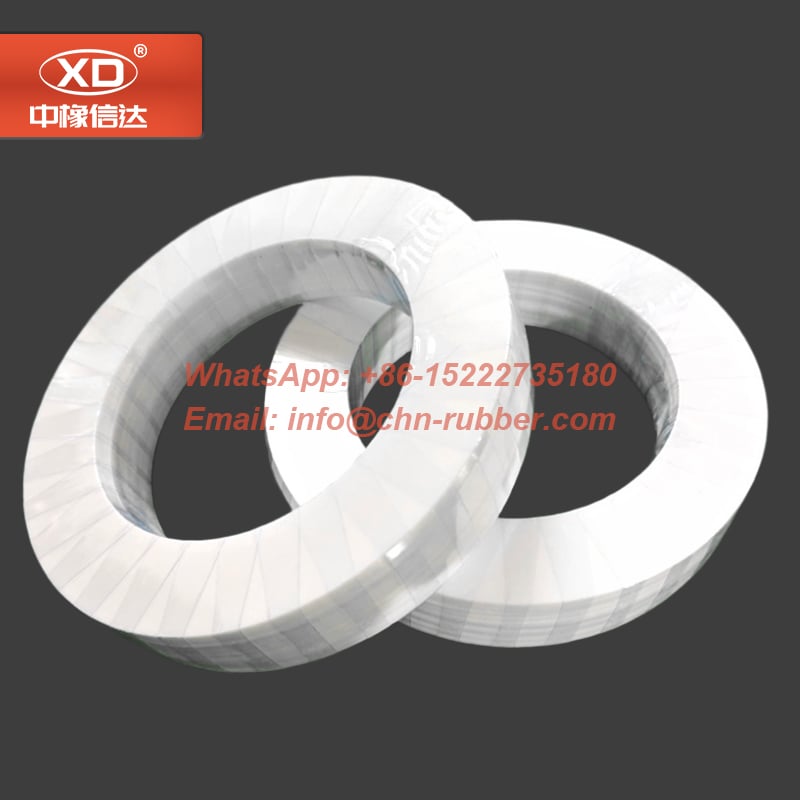
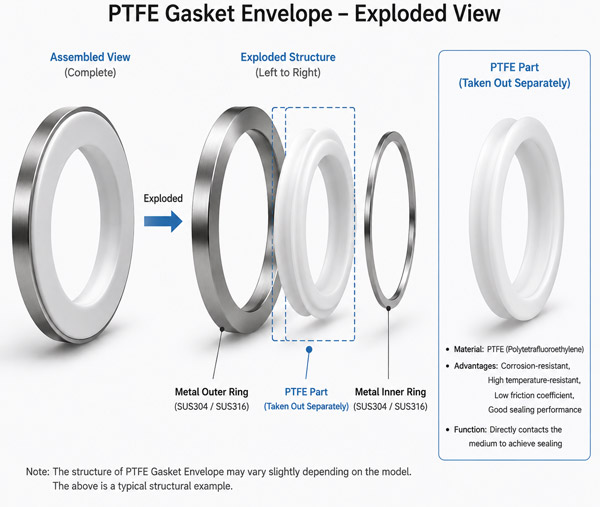
The operational success of this multi-layered assembly depends heavily on the precision geometry of its protective shield. Every gasket envelope we produce is manufactured using high-grade, micro-machined fluoropolymer resins, ensuring uniform wall thickness and zero micro-porosity. This external jacket shields the internal elastomeric core from corrosive degradation, while the inner filler provides continuous mechanical push-back against the flange faces to prevent fluid bypass.
| Engineering Performance Metric | Standard Measurement Unit | Shield Specification (PTFE Core Profile) |
| Jacket Material Virgin Density | g/cm³ | 2.10 - 2.30 |
| Outer Layer Tensile Capacity | MPa | ≥ 15.0 |
| Thermal Adaptation Spectrum | °C | -100 to +250 (Dependent on Inner Core) |
| Available Shield Configurations | Type Style | V-Type (Slit), Y-Type (Milled), Square-Type |
| Universal Chemical pH Range | pH Range | 0 - 14 (Completely Inert to Aggressive Media) |
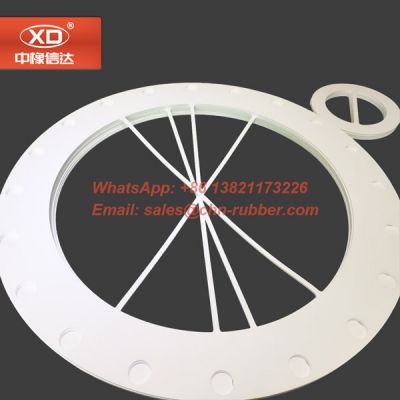
Our manufacturing plant offers several shield shapes to match various pipeline standards. The V-type slit style provides an economical solution for standard processing lines, while our precision-machined Y-type milled ptfe envelope creates a completely flush inner diameter. This smooth, gap-free profile prevents fluid stagnation, eliminating the risk of bacterial growth or cross-batch material accumulation in high-purity systems.
Preventing Leakage Paths: Eliminating Core Degradation, Fluid Absorption, and Creep
In typical chemical transport pipelines, micro-leakage failures usually occur due to chemical attack on the primary sealing element. When an unshielded elastomer ring handles strong oxidative acids, the rubber chain link degrades over time. This structural breakdown reduces mechanical tension, loosening the flange connection and leading to hazardous chemical emissions.
Our dual-material envelope gasket eliminates this common industrial risk. The continuous premium outer layer blocks direct chemical contact, ensuring the internal structural core remains isolated and fully operational. This combination leverages the high elasticity of a rubber or synthetic fiber core alongside the chemical resistance of an outer gasket envelope, preventing structural creep and long-term thickness loss even under fluctuating pressure cycles.
Sanitary and Ultra-Pure Applications: Protecting Sensitive Pharmaceutical and Food Matrices
For processing operations within the pharmaceutical, fine chemical, and beverage sectors, component purity is just as critical as leak prevention. Standard commercial seals can leach trace additives or release microscopic particles into high-purity media streams. Such contamination can compromise product quality and disrupt specialized manufacturing batches.
Our non-contaminating ptfe envelope shields meet these strict sanitary regulations. The smooth outer jacket prevents process media from soaking into the internal fillers, completely avoiding fiber extraction or material leaching. This non-stick surface resists chemical adhesion and buildup, making it easy to clean and flush the pipeline assembly during product changeovers.
Direct Factory Manufacturing Advantage: Precision Production for International Industrial Networks
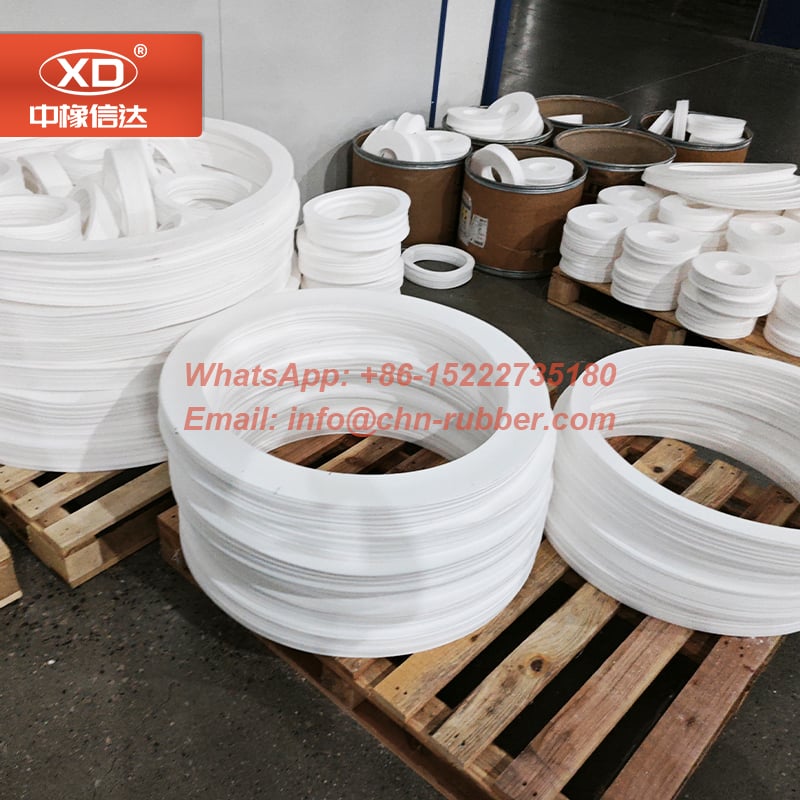
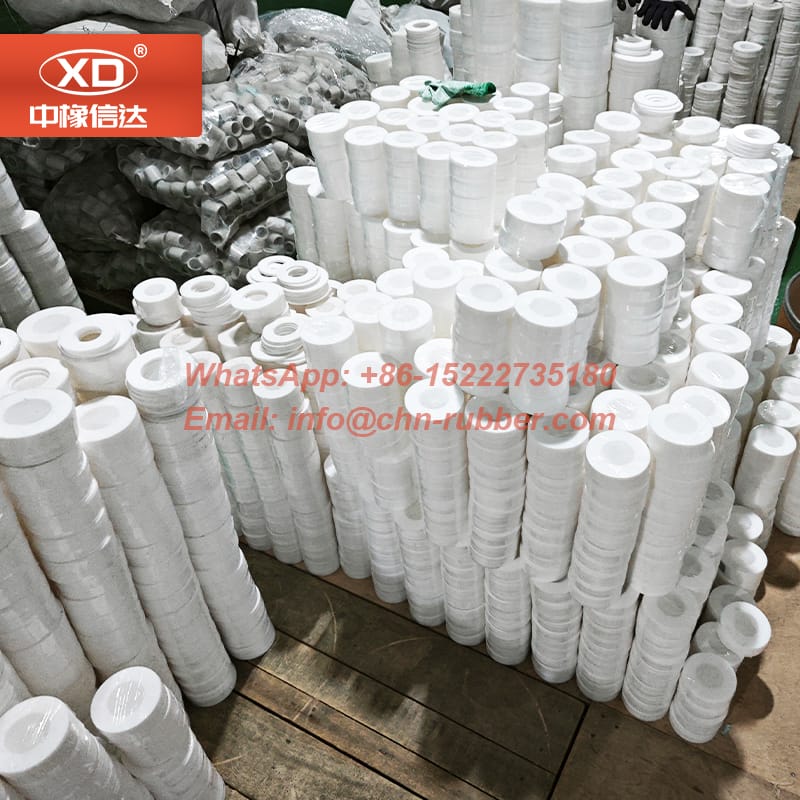
Operating an integrated production and international trade facility, we supply global engineering distributors and procurement firms with robust sealing components that align with strict international standards. Our facility utilizes advanced automated lathe cutting machinery and dedicated cleanroom stamping presses to process large-volume orders with tight dimensional tolerances and highly competitive lead times.
We manage the full manufacturing cycle internally—from inspecting incoming raw polymer resins to the complex multi-component assembly. This enables us to maintain extensive inventories conforming to ASME, DIN, and JIS flange standards, while providing rapid prototyping for specialized custom dimensions. Each shipment undergoes thorough quality checks for wall symmetry and core compression profiles before export clearance, ensuring dependable, leak-free operation on site.
Technical Performance Advantages & Seal Reliability:
- Complete Core Isolation: The premium envelope gasket design completely covers internal composite fillers, protecting them from chemical attack.
- Zero Batch Cross-Contamination: The non-porous exterior shell prevents fluid absorption, making it excellent for sanitary pharmaceutical and food lines.
- Comprehensive Quality Certification: Manufactured under strict ISO 9001 frameworks and fully verified through exhaustive testing protocols before transport.
Engineering Reference & Industrial Application FAQ
Q1: When should a milled Y-type shield be specified instead of a standard slit V-type envelope jacket?
A: The slit V-type configuration works well for traditional chemical pipelines. However, for ultra-pure pharmaceutical or clean food processing lines, the milled Y-type gasket envelope is preferred. It sits flush with the pipeline's inner diameter, eliminating fluid pockets where product could gather and spoil.
Q2: What filler core combinations are recommended for brittle, low-torque glass-lined flanges?
A: Glass-lined or plastic connections can easily warp or crack under heavy bolting loads. For these systems, we recommend a ptfe envelope paired with a soft corrugated metal inlay and synthetic fiber filler. This combination seals reliably under lower torque loads, protecting delicate flange faces while maintaining a secure joint.
Secure Your Chemical Flange System with Direct Factory Pricing
Protect your specialized piping infrastructure, chemical processing vessels, and high-purity fluid lines from leakage, material creep, and unplanned maintenance downtime. Source high-durability envelope gasket configurations customized to your exact operational requirements. Contact our export desk today to submit your engineering dimensions, coordinate sample testing, or receive a comprehensive wholesale estimate shipped directly to your port.
Kathery Cui (Sales 1)
Mobile Phone:+86 15222735180
WhatsApp: 8615222735180
E-mail: info@chn-rubber.com